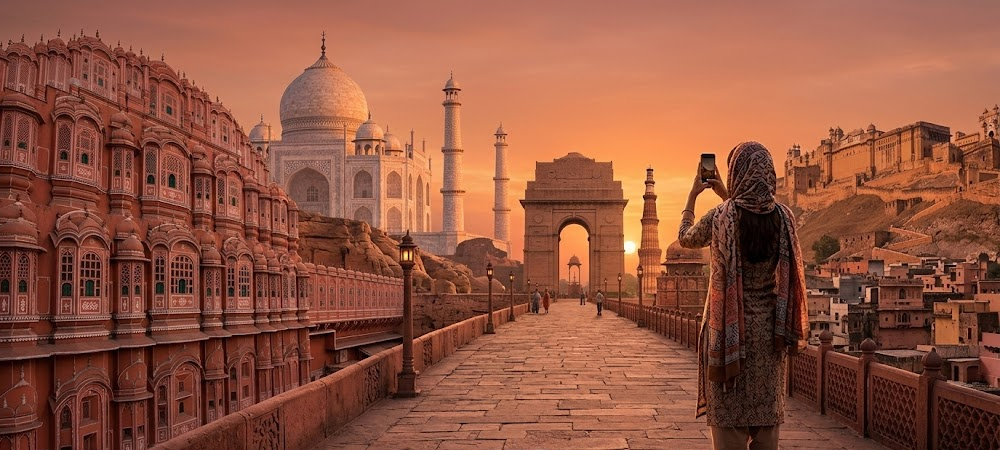
Golden Triangle India Tour Guide: Delhi, Agra & Jaipur Itinerary, Cost & Travel Tips (2026)
Let’s be real for a second. You want to visit India. You’ve seen the spectacular photos of the Taj Mahal glowing at sunrise, and you’ve heard stories about the incredible food and ancient forts. But you’re also probably a little terrified.
I completely understand. India is not a "beginner" travel destination. If traveling through Europe is like wading into the shallow end of a pool, arriving in India is like being thrown out of a helicopter into the deep end. The noise, the traffic, the sheer volume of humanity—it hits you like a wall the moment you step out of the airport.
That is exactly why the Golden Triangle exists.
The Golden Triangle—Delhi, Agra, and Jaipur—is the perfect set of stairs into that deep end. It gives you a highly concentrated dose of India's absolute best sights, history, and culture, while keeping you on a well-worn tourist trail that has the infrastructure to support you. If it's your first time in the country, this is where you start. Period.
I've done this route multiple times. I've made the mistakes, overpaid for the rickshaws, and gotten lost in the bazaars so you don't have to. Here is my complete, no-nonsense 2026 guide to surviving—and actually enjoying—India’s Golden Triangle.
What Exactly is the Golden Triangle?
Look at a map of northern India. If you draw a line from New Delhi, south to Agra, west to Jaipur, and back up to Delhi, you get an almost perfect equilateral triangle. Each leg of the trip is roughly 200 to 250 kilometers (about 125 to 155 miles). In a western country, that's a two-hour drive. In India, it's a four to six-hour adventure.
These three cities represent three completely different eras of Indian history. Delhi is the modern, chaotic capital built over centuries of ancient ruins. Agra is the pinnacle of the Mughal Empire. Jaipur is the flamboyant, deeply traditional capital of the Rajput kings. Together, they give you the complete picture.
The Ultimate 7-Day Itinerary
A lot of travel agencies try to cram this route into four days. Don't do that. You will be exhausted, cranky, and you’ll spend your entire trip inside a car. Seven days is the sweet spot. It gives you time to actually breathe.
Days 1 & 2: Delhi - The Beautiful Chaos
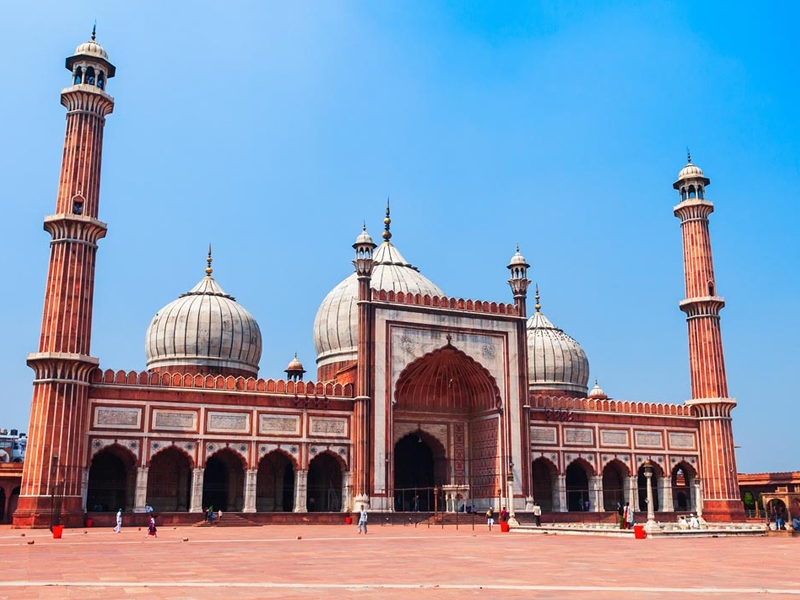 The towering minarets of Jama Masjid rising above the chaos of Old Delhi.
You’ll fly into Indira Gandhi International Airport (DEL). Spend your first day adjusting to the time zone and the culture shock. Don't plan anything massive. Walk around Connaught Place, grab some safe, high-quality street food at Haldiram's, and get a good night's sleep.
On day two, dive in. Start in Old Delhi. Hire a cycle rickshaw to take you through the impossibly narrow lanes of Chandni Chowk. It’s loud, it smells like a mix of frying jalebis and exhaust fumes, and it is absolutely thrilling. Visit the Jama Masjid, one of the largest mosques in India, and then head over to the Red Fort.
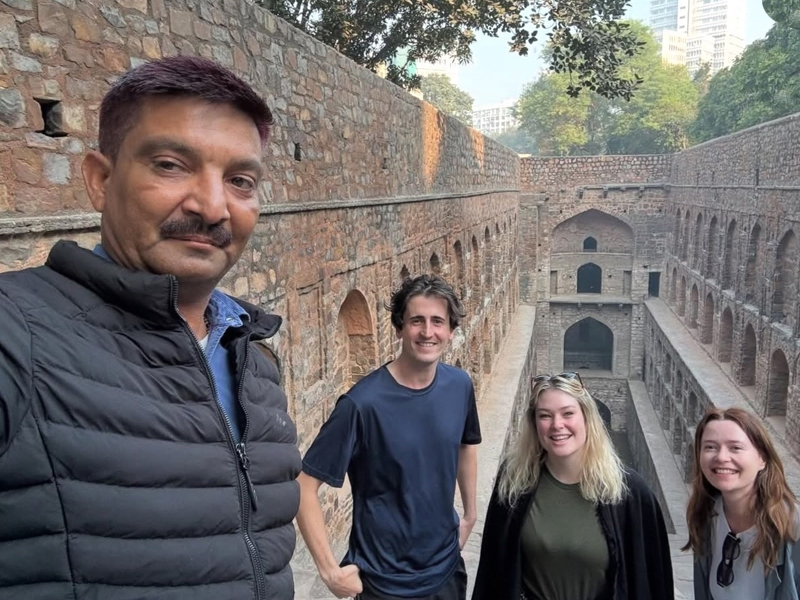
In the afternoon, escape the madness by heading to New Delhi. The contrast is jarring. Suddenly, you're on wide, tree-lined avenues. Go see Humayun’s Tomb (a stunning red sandstone precursor to the Taj Mahal) and the Qutub Minar.
My Personal Delhi Tip:
Download the Uber or Ola app before you arrive. Haggling with auto-rickshaw drivers on your first day is exhausting. Using an app gives you a fixed price and saves you a massive headache.
Day 3: Agra - The Main Event
Wake up, check out of your Delhi hotel, and hit the Yamuna Expressway. It's one of the best highways in the country, and you'll reach Agra in about three to four hours.
Agra is not a pretty city. It's highly industrial. But it holds the crown jewel. You are here for the Taj Mahal. While you could go at sunset, I heavily advise going at sunrise. Yes, waking up at 4:30 AM is painful, but watching the white marble change colors from pink to glowing white as the sun comes up—before the massive tour buses arrive—is pure magic.
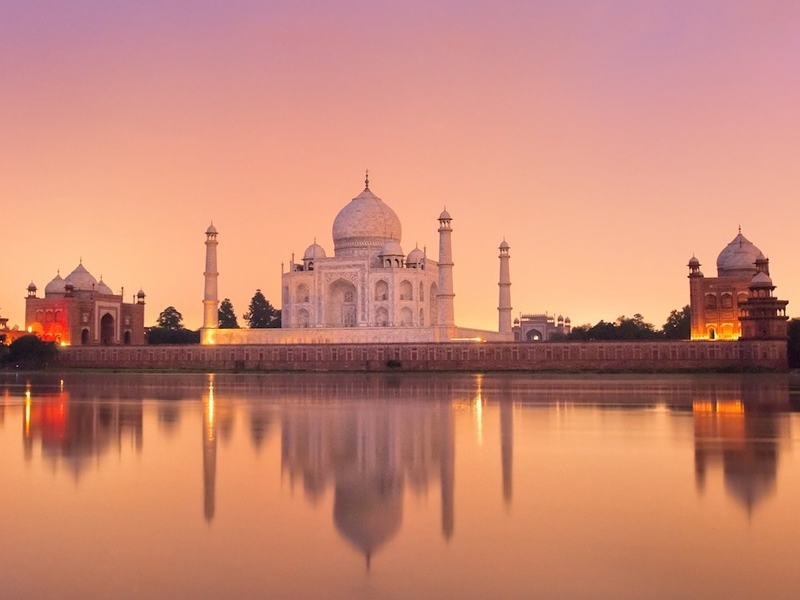 The Taj Mahal at sunrise is worth every second of lost sleep.
After a late breakfast, head to the Agra Fort. This massive red fortress is where Shah Jahan (the emperor who built the Taj Mahal) was imprisoned by his own son. The views of the Taj from the fort's balconies are hauntingly beautiful.
Days 4, 5 & 6: Jaipur - The Pink City
The drive from Agra to Jaipur takes about five hours. Break up the trip by stopping at Fatehpur Sikri, an incredible abandoned Mughal city just outside of Agra.
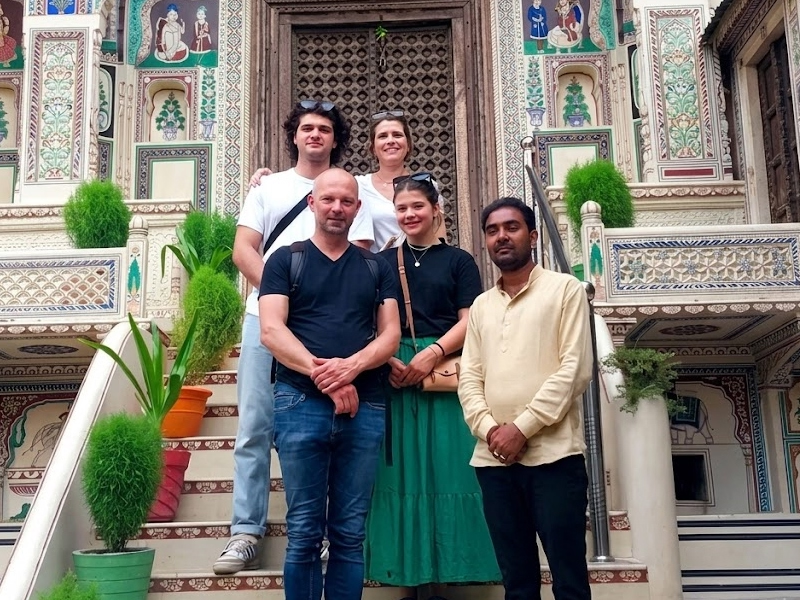
When you arrive in Jaipur, you'll immediately notice a shift in the vibe. It feels older, more regal, and deeply traditional. This is the capital of Rajasthan, the land of kings.
- Day 4: Check into a heritage hotel (an old palace converted into a hotel) and spend the evening wandering the bazaars. Jaipur is world-famous for textiles, jewelry, and blue pottery.
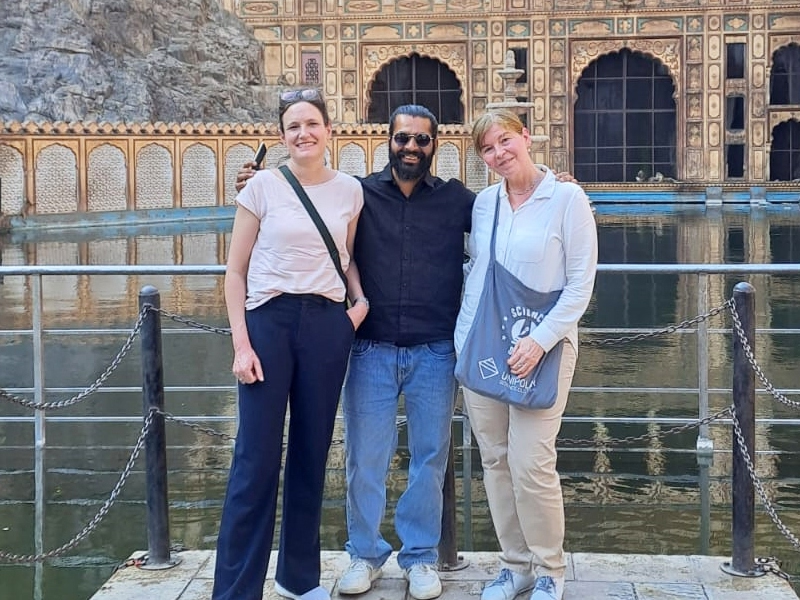
- Day 5: Head just outside the city to the Amber Fort. It sits high on a rugged hill. Skip the elephant rides (they aren't ethical) and take a jeep or hike up. The mirror palace inside is spectacular. On your way back to the city, stop for a photo at the Jal Mahal, a palace literally floating in the middle of a lake.
- Day 6: Explore the city center. Visit the City Palace (where the royal family still lives) and the Jantar Mantar, an ancient astronomical observatory with the world's largest stone sundial. Finally, get your classic shot of the Hawa Mahal (Palace of Winds).
Day 7: The Journey Home
Take the morning to enjoy a final cup of masala chai on a rooftop, then make the five-hour drive back to Delhi for your flight home. You survived, and you'll have stories for a lifetime.
How to Get Around (The Stress-Free Way)
This is the most important part of this guide. Pay attention.
Do not try to rent a car and drive yourself. The traffic rules in India are closer to suggestions, and the highway driving is a chaotic ballet of cows, trucks, motorcycles, and pedestrians.
While you can take the train between these cities (the Vande Bharat express trains are actually quite nice), dealing with Indian railway stations with heavy luggage on a tight schedule is highly stressful for a first-timer.
The absolute best way to do the Golden Triangle is to hire a private driver. It is surprisingly affordable in India and takes 90% of the stress out of the trip. You get door-to-door service, air conditioning, and a local expert to help you navigate. I highly recommend booking your transport and logistics through Explore India Private Tours. They specialize in this exact route, their drivers are incredibly professional, and they can customize the whole itinerary so you don't have to lift a finger.
Budgeting: What Does the Golden Triangle Cost?
India can be as cheap or as expensive as you want it to be. You can sleep in a $10 hostel or a $1,000-a-night Maharaja's palace. Below is a realistic breakdown of what you can expect to spend per person, per day in 2026, assuming you are traveling with a partner.
| Category | Backpacker Budget | Mid-Range (Comfortable) | Luxury (Palaces & 5-Star) |
|---|---|---|---|
| Accommodation | $15 - $30 | $60 - $120 | $250 - $800+ |
| Food & Drink | $10 - $15 | $25 - $45 | $80 - $150 |
| Transport (Intercity) | $10 (Trains/Buses) | $40 (Private Driver Split) | $80 (Premium SUV) |
| Attractions & Guides | $15 - $25 | $30 - $50 | $60 - $100 |
| Total Per Day | $50 - $80 | $155 - $255 | $470 - $1,130+ |
A Note on Monuments:
Foreign tourists pay significantly more for entrance fees than Indian citizens. For example, the Taj Mahal costs about $15 USD for a foreigner, while locals pay pennies. Just accept it as part of the travel budget.
Crucial Travel Tips for First-Timers
1. Avoiding "Delhi Belly"
Food poisoning is the number one fear for travelers to India. You can largely avoid it if you follow a few strict rules: Never drink tap water. Even use bottled water to brush your teeth. Avoid raw salads or fruit you can't peel yourself (like apples). Eat at busy places where the food turnover is high. If a restaurant is empty, walk away.
2. The Art of the "No"
As a tourist, you will be approached by touts, souvenir sellers, and auto-rickshaw drivers constantly. If you make eye contact or politely say "maybe later," they will follow you for three blocks. You have to learn the Indian head wobble, or simply offer a firm, loud, and confident "No." Don't feel rude; it's just how business is done.
3. Dress Conservatively
India is deeply conservative. Even when it's sweltering hot, leave the short-shorts and tank tops at home. Both men and women should wear light, breathable cotton clothing that covers the shoulders and knees. You'll need to take your shoes off to enter temples and mosques, so wear slip-ons.
When is the Best Time to Visit?
Do not go in May or June unless you enjoy melting. The temperatures in Delhi and Agra regularly hit 45°C (113°F). July and August bring the monsoon rains, which turn the streets into muddy rivers.
The golden window is from October to March. The days are sunny and pleasant, and the nights are cool. Keep in mind that December and January can actually get quite foggy and chilly in the north, which sometimes delays flights and trains, but it's still vastly better than the summer heat.
Final Thoughts
The Golden Triangle is intense. It will overwhelm your senses, test your patience, and push you out of your comfort zone. But it will also reward you with some of the most spectacular architecture, warmest hospitality, and vibrant culture you will ever experience in your life.
Book the flights. Hire a great company like Explore India Private Tours to handle the heavy lifting, and dive in. You're going to love it.